
Sheepherding story points
Open votes let the first estimate anchor the room. See how the sheep effect skews story points and how to run planning poker honestly.
Story point estimation is often neglected or done in chat rooms and open meetings where everyone can see or hear every vote. Knowing how others voted distorts the outcome and produces inaccurate estimates. Repeated inaccurate estimates lead to flawed plans and delayed or canceled deliveries. Here is what happens in an open vote.
The characters in voting
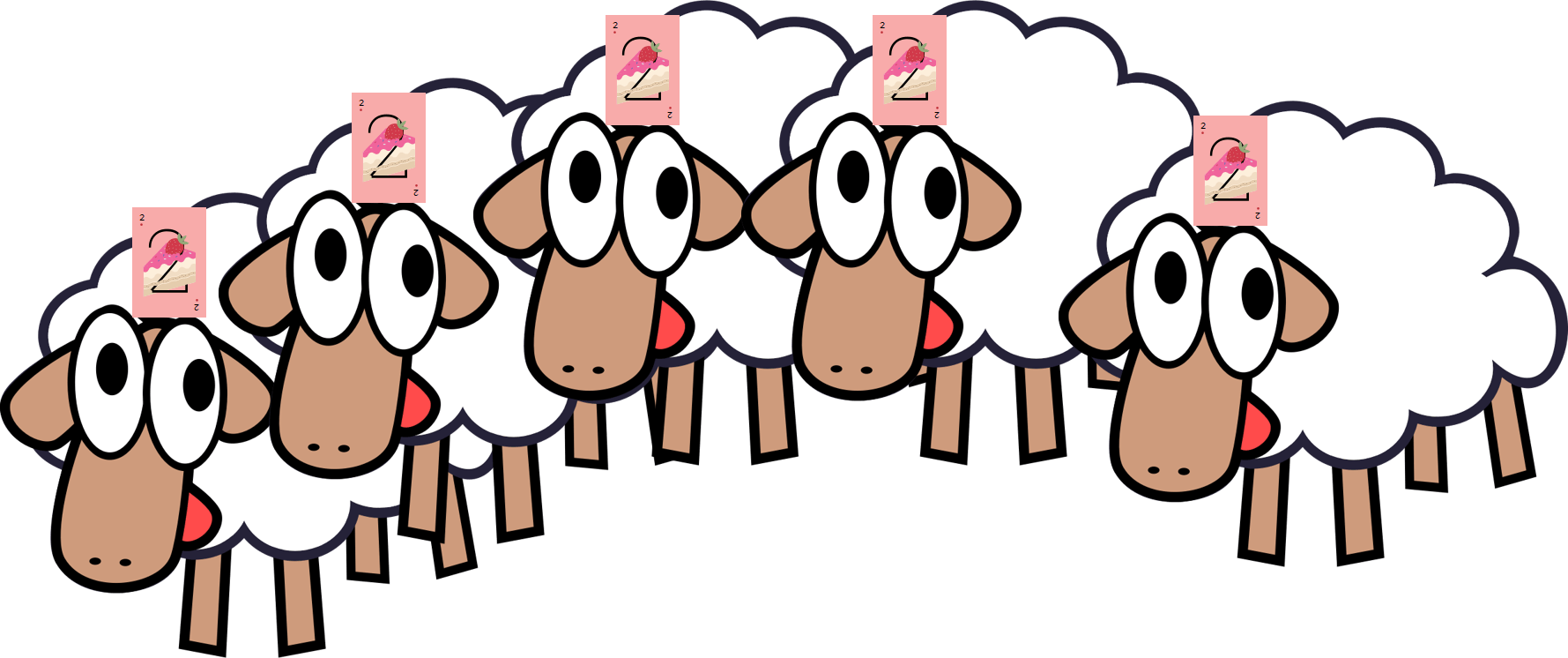
Several characters show up in an open estimation vote. The estimate depends on who goes first, and it is usually far from honest. Why does the order matter so much in an open vote? Because of the sheep effect: the anchoring bias that makes other team members copy the first estimate.
The sheep effect
The overconfident voter
Every team has at least one member who believes they know the system best. They usually vote first, because the answers seem obvious to them. They often overlook details that can derail the estimate. Those details can be uncovered in advance, but only if someone prompts a discussion. That cannot happen in an open vote.
This person usually votes lower than the honest estimate. Perhaps only they could finish the story that quickly, and only with luck.

The overconfident voter
Everyone else follows, so the task looks easy and doable by anyone in the allotted time. In practice, someone else usually ends up doing it.
The quiet voter
There is usually more than one quiet voter, and they are afraid to vote first. They wait for someone else to vote so they can copy it. They rarely join the discussion and answer only when asked. They vote second, just before the disengaged voters.

The quiet voter
The disengaged voter
They are hard to pin down during implementation, but their behavior is obvious during voting. They always vote last and copy someone else's estimate. If the estimates differ, they pick the most common one. They do not want to explain why they chose a lower or higher number, so they avoid collaborating in refinement and dodge questions.

The disengaged voter
The tired voter
Some team members cannot stay focused for long and miss key parts of the discussion. They lose context and either guess or hunt for the most common vote to copy.

The tired voter
How to keep the attention during estimation
Estimation matters because only honest story points can keep a project on track to its release date. The key to honest estimation is to counter the sheep effect, whether you use paper cards or software.
Team members should never see each other's estimates until the moderator reveals them. This way the quiet voter starts thinking, the disengaged voter gets interested and the tired voter wakes up. The best question to ask, especially when someone disagrees with the group, is "why did you vote X story points?" That starts a conversation about the real implementation issues. Closed questions such as "would you agree with X story points?" invite a meaningless "yes".
A good estimation tool makes refinement more engaging and keeps everyone alert and ready to discuss, so even complex stories get better estimates.
Related articles
- Managing sprint dependencies with chained pull requestsDependent tickets stall a sprint while people wait. Learn how stacked pull requests keep work moving and reduce idle time.
- Comparison metrics for agile teamsMetrics should create equal ground, not a leaderboard. Four comparison metrics that motivate agile teams without punishing them.
- The 10% Scrumban rule for every sprintCommitting to full capacity makes every sprint fragile. A 10% Scrumban buffer absorbs risk, protects the sprint goal and lets velocity grow naturally.
About AELBOX
AELBOX is the team behind Scrumpy Planning Poker for Jira. We write about agile estimation, sprint planning and delivery.